
Happy Camper Therapy · Blog
Somatic Therapy for Burnout: Why Exhaustion Lives in the Body, Not Just the Calendar

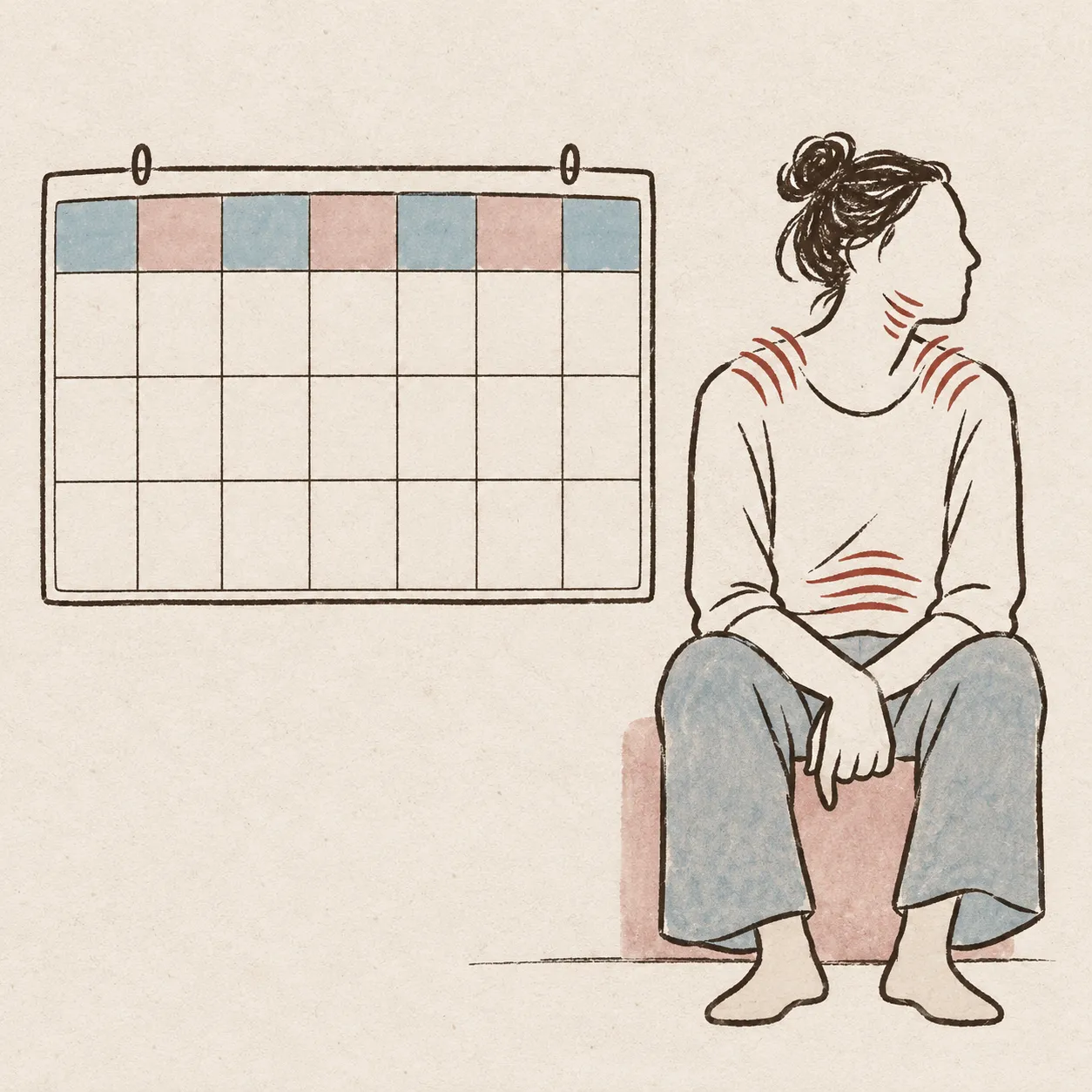
“I took a whole week off, and I came back just as tired.” We hear some version of that a lot. The calendar got cleared, but the body never got the message. Somatic therapy for burnout starts in that gap. Exhaustion can be a scheduling problem, and it can also be something your nervous system is still carrying after the schedule eases up. If that sounds familiar, you can schedule a free discovery call, or first read how we approach burnout and life transitions with adults.
Why a vacation doesn’t fix burnout
The World Health Organization describes burnout as chronic workplace stress “that has not been successfully managed,” marked by three things: exhaustion, growing distance or cynicism about your work, and a sense that you are less effective than you used to be (World Health Organization, 2019).
Notice the word chronic. Months of running on alert teach the body a pattern. A quiet inbox for one week doesn’t undo it. You can often feel that pattern. A systematic review of prospective studies found burnout predicted later physical problems, including musculoskeletal pain, prolonged fatigue, headaches, and gastrointestinal trouble (Salvagioni et al., 2017).
Maybe it’s a tight jaw, or a stomach that never quite settles, or waking at 3 a.m. with your mind already at work. Those are common ways stress lives in the body. Fatigue, poor sleep, headaches, and pain can also have medical causes, so a check-in with your doctor belongs alongside this work rather than in place of it.
How somatic therapy for burnout works
“Somatic” means “of the body.” Talk therapy works mostly with thoughts and stories. Somatic work adds what you notice inside your body while you talk. One well-known approach, Somatic Experiencing, centers on two kinds of noticing: interoception, which is sensing what is happening inside you (a racing heart, a held breath), and proprioception, which is sensing where your body is and how it moves (Payne, Levine & Crane-Godreau, 2015).
The work is paced. You touch a small piece of stress, come back to something steady, then go back again. Over time your system learns it can step out of alarm without getting flooded.
This part surprises people. Many burned-out adults already know, in their heads, that they need to slow down. What they can’t do is feel safe slowing down. Somatic work aims at that second piece, and insight alone often doesn’t reach it.
If you’ve done talk therapy before and still feel wired and depleted, you haven’t failed at it. A different door may be worth trying.
A word on the evidence, because you deserve a straight answer. The first randomized trial of Somatic Experiencing showed meaningful drops in symptoms, but the people in it were adults with PTSD, not burnout (Brom et al., 2017). Research on body-based work for burnout itself is still catching up.
What it looks like at Happy Camper
Healing isn’t one-size-fits-all, so somatic work gets woven into the rest of your care rather than handed to you as a separate program. Many adults choose our nature-based therapy sessions, held outdoors, where the setting does some of the regulating work for you. From our Woodlands Basecamp, or Nature trails in Magnolia or Memorial; Walk and talk therapy uses movement to calm your body while the forest reminds your nervous system what safety feels like.
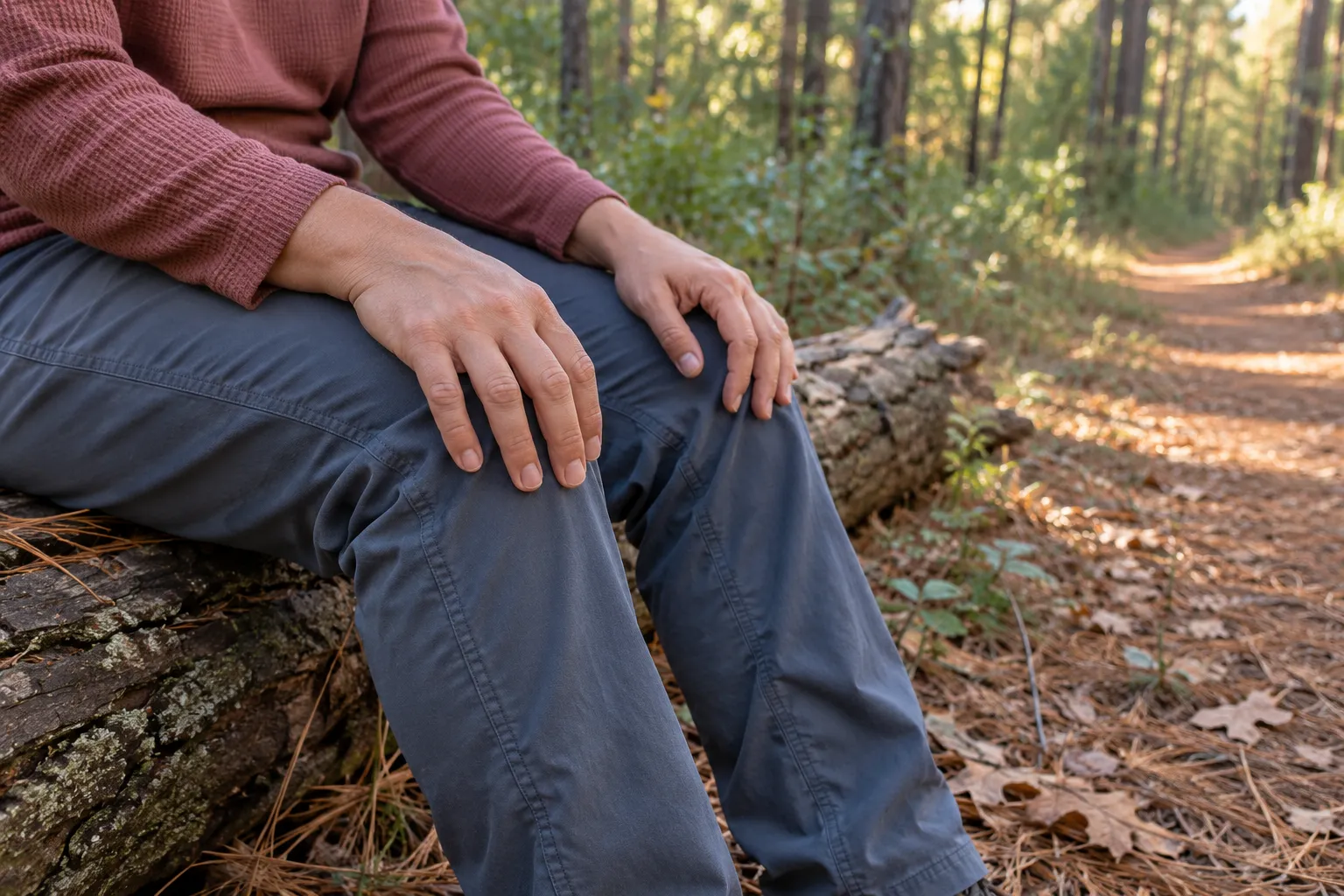
Being on a trail doesn’t make it casual. It is still structured clinical work. Your therapist is what we call a resourced traveling companion. They keep an eye on pacing and help you notice what your body is doing, with the aim of you leaving a little steadier than you arrived.
If getting outdoors is not practical, we also offer office sessions and therapy by telehealth. This is outpatient care. If you need more support than weekly sessions can offer, a higher level of care comes first, and we’ll help you find it.
A next step that doesn’t add to the pile
You don’t need a tidy explanation to start. “I’m tired in a way rest doesn’t fix” is enough. If you have questions first, our adult therapy FAQ covers the practical ones. If you are unsure whether we are the right fit, reach out — we are happy to help you think it through.
Book a free 15-minute discovery call
References
- Brom, D., et al. (2017). Somatic Experiencing for posttraumatic stress disorder: A randomized controlled outcome study. Journal of Traumatic Stress. https://doi.org/10.1002/jts.22189
- Payne, P., Levine, P. A., & Crane-Godreau, M. A. (2015). Somatic experiencing: Using interoception and proprioception as core elements of trauma therapy. Frontiers in Psychology. https://www.frontiersin.org/articles/10.3389/fpsyg.2015.00093/full
- Salvagioni, D. A. J., et al. (2017). Physical, psychological and occupational consequences of job burnout: A systematic review of prospective studies. PLoS One. https://journals.plos.org/plosone/article?id=10.1371/journal.pone.0185781
- World Health Organization. (2019). Burn-out an “occupational phenomenon”: International Classification of Diseases. https://www.who.int/news/item/28-05-2019-burn-out-an-occupational-phenomenon-international-classification-of-diseases
This article is for educational purposes only. It is not therapy, medical advice, a diagnosis, or a treatment recommendation, and reading it does not create a therapeutic relationship. If you are struggling, please reach out to a licensed professional. If you are in crisis or immediate danger, call or text 988, or call 911.
Happy Camper Therapy
Child & Family Therapy Practice
Happy Camper Therapy offers play therapy, EMDR, nature-based care, and family counseling for children, teens, and adults in The Woodlands and Houston, TX.
Schedule a Consultation