
Happy Camper Therapy · Blog
Can Nature Help Improve Mental Health? Understanding the Connection Between Soil, Gardening, and Emotional Well-Being
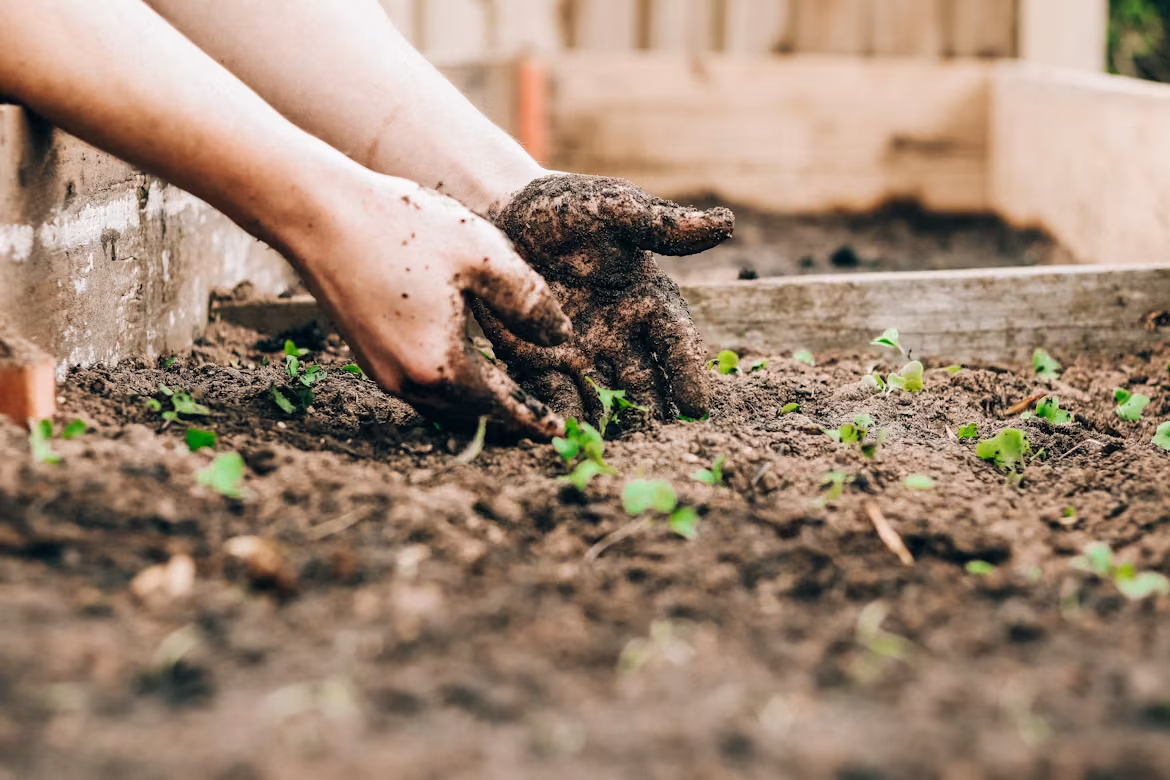
Given a world filled with screens, busy schedules, and heavy stress can feel like something we have to make time for, instead of something we naturally do. Research is showing that our connection to nature is a vital part of our physical and emotional well-being. From walking in a forest to gardening in the soil, it is well-known that being physically involved in the environment can have benefits way beyond simply having fun out there.
Researchers have increasingly explored the relationship between nature, stress, the nervous system, immune functioning, and emotional health. Practices such as forest bathing and therapeutic gardening have gained attention because they provide opportunities to slow down, engage the senses, and reconnect with the natural environment. Although nature exposure should not be viewed as a replacement for professional mental health treatment, it may be a meaningful part of a healthy approach to managing stress and supporting emotional well-being.
What Is the Connection Between Nature and Mental Health?
Nature can provide an environment that promotes relaxation, mindfulness, and sensory awareness. Forest bathing (or Shinrin-yoku) is the act of being in a forest to soak in the sights, smells, textures, and atmosphere of the forest, and so on. Unlike hiking or exercising, there is no physical activity in it, and the goal is to slow down and be near nature with the senses.
Research on forest medicine indicates that spending time in natural environments may influence the body’s stress response and interactions between the nervous, endocrine, and immune systems. Studies on stress hormones, autonomic nervous system activity, immune functioning, and mood after exposure to forests have been done.
How Nature May Support Emotional Well-Being
1. Nature May Help Reduce Stress
Stress affects both mind and body. When people experience continued stress, the body’s stress response systems can be activated, leading to physical and emotional strain. Research on forest bathing points out that when spent in a forest environment, one’s mind relaxes and the signs of stress become less visible.
Forest-medicine studies have described a connection between natural environments and the autonomic nervous system, namely that the parasympathetic activity in the forest should increase when the body is resting and recovering. In addition, many stress-related measures have been reduced or mitigated by forest exposure, such as cortisol.
2. Gardening Provides an Opportunity to Slow Down
Gardening is another simple way people can interact with nature. Planting flowers, caring for vegetables, touching soil, or just getting outside and being around a lot can help you to get away from the day-to-day distractions.
Gardening also involves the physical aspect of the process to keep you in the present moment. Instead of constantly checking a phone or thinking about what is next, gardening requires attention to what is happening in the environment. This type of activity could lead to a lot of relaxation and positive emotional experiences.
3. Soil Contains Microorganisms That May Influence the Body
One of the most interesting areas of research is the microorganisms in soil. Soil contains many different kinds of bacteria and other microorganisms, and researchers have begun investigating how interactions with some of these organisms may affect human health.
Mycobacterium vaccae has been studied to determine how exposure to this soil microorganism may affect immune responses and pathways involved in emotional behavior. It has been speculated that immune activation associated with this microorganism could affect serotonergic systems involved in mood and emotional regulation.
This doesn’t mean soil is an antidepressant or that touching dirt can treat depression. Rather, these findings are an interesting example of how the environment, immune system, and brain may work in ways researchers are still experimenting with.
4. Horticultural Activities May Influence Mood and Physiological Responses
Recent research has also examined what happens when people engage in gardening-related activities with soil microorganisms. In one pilot study, adults were asked to mix soil using Streptomyces rimosus. After that experiment, researchers reported physiological and emotional changes.
Participants exposed to the microorganism-infused soil had higher serum serotonin levels, lower C-reactive protein levels, increased alpha-wave activity in part of the brain, and higher positive subjective emotional states than in the control condition.
Because the study only consisted of 30 participants and was performed in a short and controlled way, more research is required before conclusions are made about the long-term effects of gardening or soil exposure. But the findings dovetail with growing interest in how horticulture, microorganisms, and human health are linked.
5. Forests Engage Multiple Senses
It’s why nature can be calming to many senses at one time, in that nature is a quiet environment in which we can try to reach out to an entire range of senses as a whole and have many at once. Forest bathing makes people aware of the sounds of birds and leaves, the smell of trees and soil, the feeling of natural surfaces, and the sights of plants and landscapes.
According to forest medicine research, these sensory experiences are central to Shinrin-yoku. The goal is not to perform one physical task but to be more aware of the environment in which we are.
Signs You May Benefit From More Time in Nature
Spending time outdoors is not a treatment for every mental health concern. However, incorporating nature into everyday routines may provide a healthy opportunity for relaxation and self-care.
Some signs that you may benefit from intentionally creating more time away from technology and indoors include:
- Feeling constantly stressed or mentally overwhelmed
- Spending most of the day looking at screens
- Having difficulty slowing down or relaxing
- Feeling disconnected from your surroundings
- Experiencing difficulty focusing
- Feeling emotionally drained after a busy day
- Having little time for hobbies or restorative activities
- Wanting to develop healthier stress-management habits
Simple Ways to Connect With Nature
Culture: Connecting to nature is not about living near a forest or spending hours out there in nature. Small acts can be applied to incorporate nature into our lives in some way.
Gardening
Growing flowers, herbs, vegetables, or houseplants can provide regular opportunities to interact with plants and soil. Gardening offers the feeling of responsibility, accomplishment, and connection with something living.
Take a Mindful Walk
Instead of focusing on exercise or how quickly you can finish your walk, try paying attention to your surroundings. Focus on the sounds, smells, colors, temperature, and movement around you.
Spend time in a park
A nearby park might be an accessible alternative for people who don’t have access to a huge forest. Sitting under a tree, walking along a trail, or simply watching the world can give you a break from daily stressors.
Take a Break From Technology
If you can put your phone away during part of your outdoor time, the digital distractions may be less distracting to you, and you’re more focused on the environment, and at least on the environment, and you will be on time.
How do I make nature part of my routine?
Rather than waiting until you feel overwhelmed, make outdoor time an important part of your week. Even small, regular interactions with nature can help create healthier routines around stress management and self-care.
How Therapy Can Support Mental Health and Healthy Coping
Nature-based activities can be beneficial in maintaining a healthy lifestyle, but not an alternative to professional mental health care for someone in great distress. Therapy can help to develop the mental health process in an organized and supportive manner for people to talk about stress, anxiety, depression, relationships, and a lot more.
Therapists may also be able to help clients come up with healthy coping strategies that work for their context. For some people, it can be one of the more fundamental things you’re doing outside, such as gardening, mindfulness, or other meaningful activities that may be part of a whole self-care and coping plan.
Happy Camper Therapy believes that emotional well-being means getting to know the full person. Nature can help one slow their pace down, be more patient, restore their equilibrium, and receive very professional help for that.
Final Thoughts
Nature’s relationship is more important for our health than we often realize. Research on forest bathing, soil microorganisms, and horticultural activities suggests that interactions with nature (and its natural environment) could shape stress, mood, physiological functioning, and the brain-immune system relationship.
We should also take this research realistically. Some studies are still relatively small, and we are still working out exactly how nature exposure and soil microorganisms can affect human health. Nature is not a substitute for therapy or medical treatment.
A walk outside, tending to a garden, sitting under a tree, or even taking a few minutes to look at the natural world can be a great way to allow for relaxation and connection. Sometimes, supporting our emotional well-being starts with a simple step outside and reconnecting with the world around us.