
Happy Camper Therapy · Blog
What Is Play Therapy For? Why It Is not Just Playing
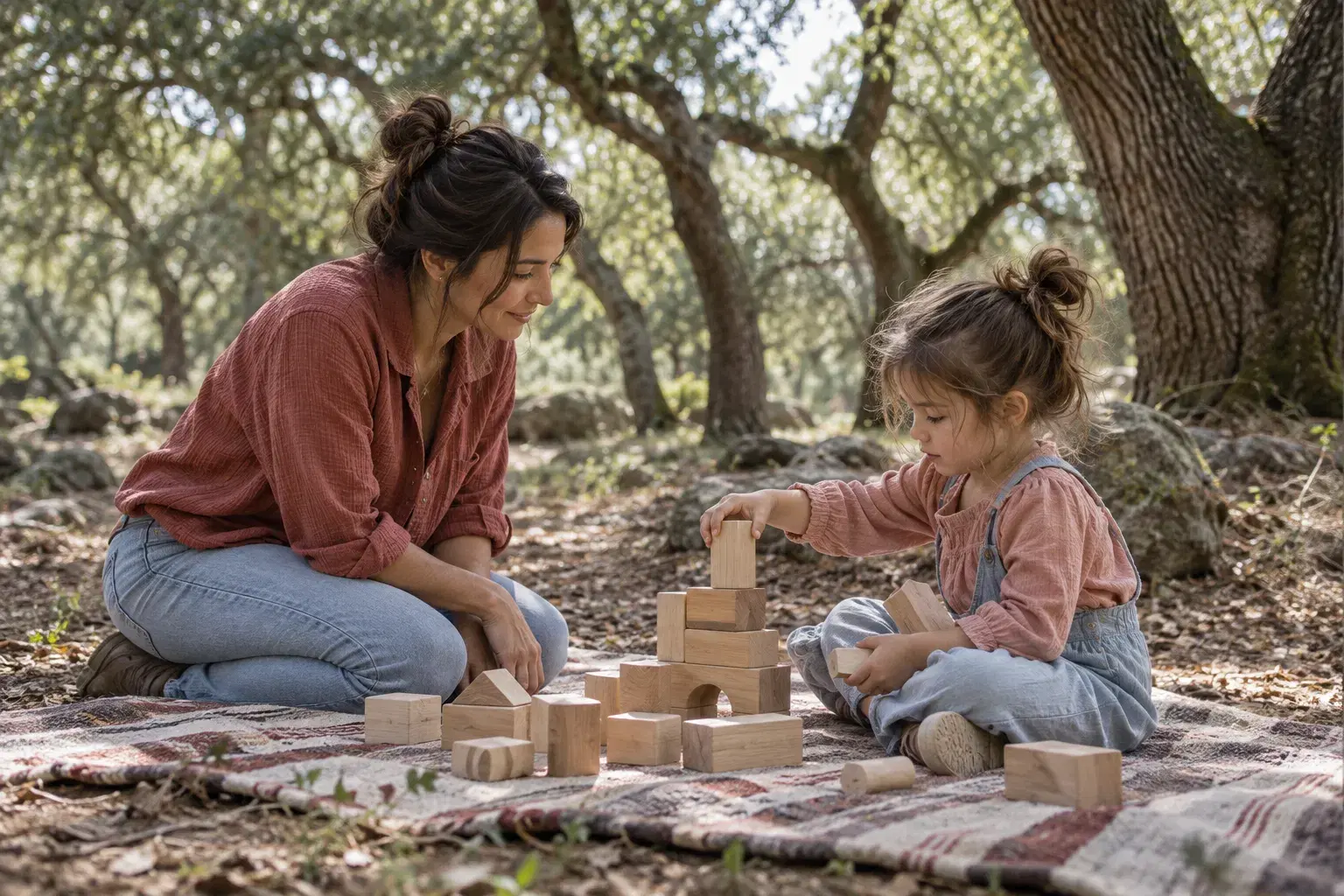
After a first session, parents often ask us some version of the same thing: “So… you just played with her?” It’s a fair question. From the outside, play therapy can look like an hour of blocks and puppets. So what is play therapy, really? It is structured clinical work that uses play the way adult therapy uses conversation, because for most young children, play is the language they actually speak.
If you are wondering whether it fits your child, a free discovery call is an easy place to start.
What is play therapy, in plain words?
The Association for Play Therapy describes it as the systematic use of a theoretical model in which trained play therapists “use the therapeutic powers of play” to help clients prevent or resolve difficulties and grow. The words to notice are systematic and trained. Play is the medium, and the therapy is everything the clinician does with it.
An adult can talk a hard week through with a friend. Most young children can’t do that yet, because the skill of turning feelings into sentences is still growing. Ask a six-year-old “How did that make you feel?” and you will often get a shrug. Hand that same child a family of toy figures, and you may watch the whole week play out on the floor.
Why it isn’t “just playing”
For about thirty seconds, ordinary play and play therapy look the same. After that, a few things set them apart.
The therapist follows rather than leads. At home, adults playing with kids tend to direct: “Let’s build a tower.” In play therapy, the clinician mostly follows the child’s lead and puts words to what they see: “That dinosaur is really angry. He knocked everything down.” Being understood without having to explain is regulating in itself.
Themes repeat until they shift. A child may play the same scene week after week (a car crash, a lost puppy, a house where someone keeps leaving). That repetition isn’t a child being stuck. It is a child working on something, and a trained clinician watches for the moment the story changes, when the puppy gets found or someone comes back to help.
Limits are part of the treatment. Play therapists set calm, clear limits (“The paint is for paper, not for walls”). A child learns that big feelings are allowed and that there are still safe edges around them, which is exactly the skill a parent hopes to see at bedtime.

What the research shows, and where it stops
Play therapy has a real evidence base. A meta-analysis of 93 controlled studies by Bratton and colleagues found a large overall effect, and a later review of 52 studies of child-centered play therapy found a moderate one. Both reviews found something every parent should hear: results were stronger when caregivers were involved.
We want to be honest about the limits, too. We can’t do it alone. Parents are part of the work with us, not just the people in the waiting area. When a family system is under strain, the child is usually showing the strain, not causing it. Parents learning a few of the same skills at home is often where change holds.
The wider science on play backs up the instinct behind all of this. The American Academy of Pediatrics’ report The Power of Play describes play with a caring adult as a buffer against stress and a builder of the self-control children need later.
Who play therapy tends to help
Families usually come to us when a child’s behavior has changed and no one is quite sure why. That might look like big reactions over small things, trouble with separation, or worry that won’t settle. It might be a child working through a loss, a move, a divorce, a medical experience, or adoption or foster care. We describe what a child is going through first and leave labels to a proper assessment. Play therapy is generally a fit for younger children, and as children get older the work can shift toward more talk.
How we do it at Happy Camper
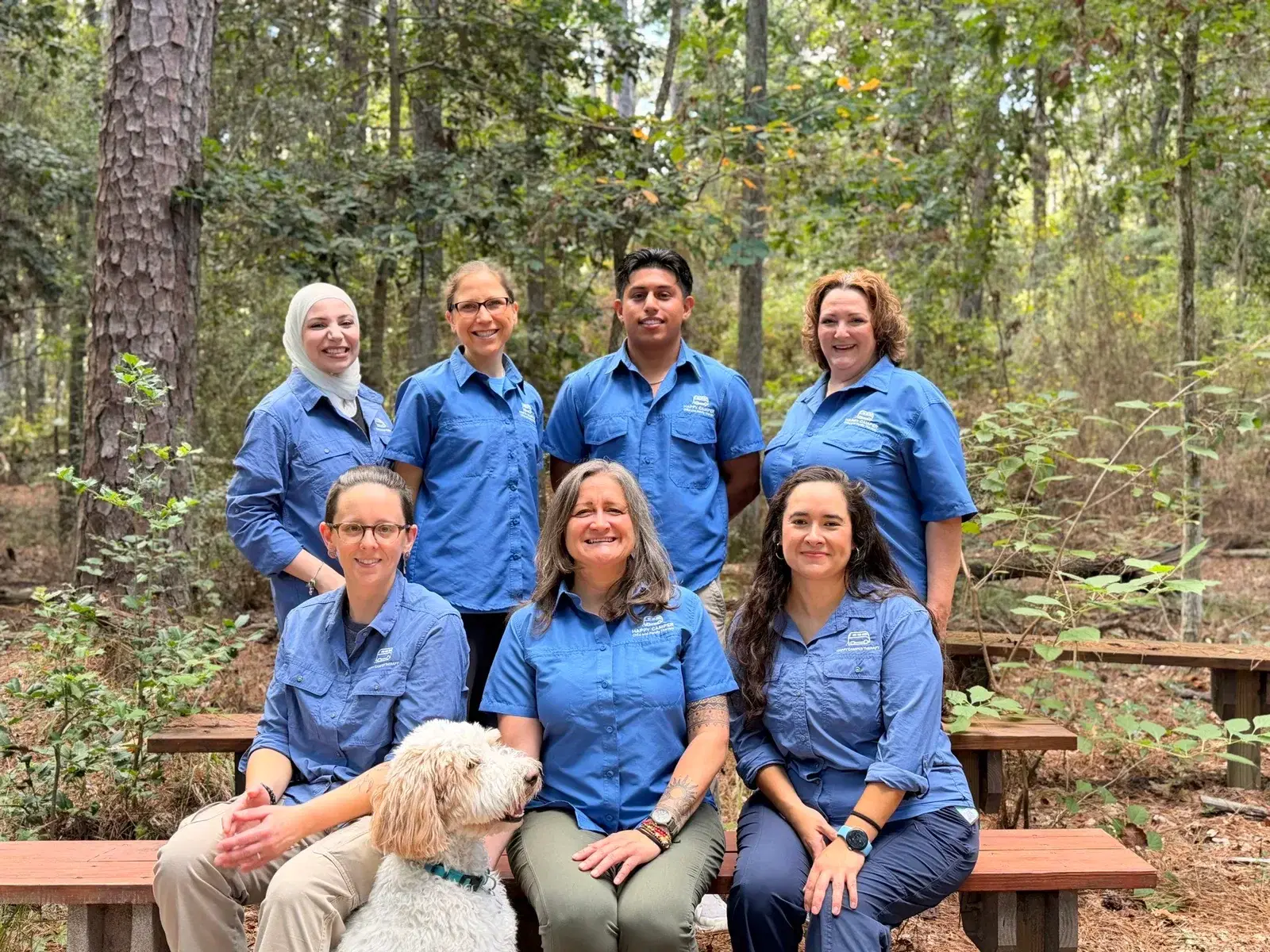
Our child therapy services are led by clinicians trained in play therapy, and Elizabeth Pennington, LPC-S, is a Registered Play Therapist Supervisor (RPT-S). We see children at our Basecamps. Families looking for play therapy in Conroe, The Woodlands, and the surrounding area can also ask about our fitted-out play therapy van, which comes to you. Some sessions move outdoors when clinically appropriate — our nature-based therapy approach explains why the setting can do some of the regulating work.
Healing isn’t one-size-fits-all, and neither is play. If you have questions about ages or how parents are involved, our kids and families FAQ covers the common ones.
If you are unsure whether we are the right fit, reach out — we are happy to help you think it through. Book a free 15-minute discovery call.
This article is for educational purposes only. It is not therapy, medical advice, a diagnosis, or a treatment recommendation, and reading it does not create a therapeutic relationship. If you are struggling, please reach out to a licensed professional. If you are in crisis or immediate danger, call or text 988, or call 911.
References
- Association for Play Therapy. Why Play Therapy? https://www.a4pt.org/page/WhyPlayTherapy
- Bratton, S. C., Ray, D., Rhine, T., & Jones, L. (2005). The efficacy of play therapy with children: A meta-analytic review of treatment outcomes. Professional Psychology: Research and Practice, 36(4), 376–390. https://doi.org/10.1037/0735-7028.36.4.376
- Lin, Y.-W., & Bratton, S. C. (2015). A meta-analytic review of child-centered play therapy approaches. Journal of Counseling & Development, 93(1), 45–58. https://doi.org/10.1002/j.1556-6676.2015.00180.x
- Yogman, M., Garner, A., Hutchinson, J., Hirsh-Pasek, K., Golinkoff, R. M., et al. (2018). The power of play: A pediatric role in enhancing development in young children. Pediatrics, 142(3), e20182058. https://doi.org/10.1542/peds.2018-2058
Happy Camper Therapy
Child & Family Therapy Practice
Happy Camper Therapy offers play therapy, EMDR, nature-based care, and family counseling for children, teens, and adults in The Woodlands and Houston, TX.
Schedule a Consultation